
Monthly Archives: February 2015
5 Ways to Save Money on LTL Shipping Rates
For businesses that ship products often, LTL shipping can be incredibly beneficial and cost-effective. LTL stands for “less than truckload” and refers to a freight shipment that doesn’t fill an entire truck. LTL shipments are usually shipped on pallets and range anywhere from 150 to 10,000 pounds.
Factors Affecting LTL Shipping Rates
Rates for LTL shipping are influenced by many factors such as:
- Weight
- Distance between locations
- The classification of the freight
Over the past several years, the ground transportation industry has seen an increase in shipping rates. The price hikes have affected both businesses and individuals, and businesses that ship via LTL shipping are no exception. Many LTL carriers have done their best to combat the rising shipping costs, but they can only do so much when it comes to keeping costs low. Carrier base rates and accessorial charges can vary significantly between carriers, making it increasingly important to keep an eye on your charges. However, if you’re not careful, seemingly minor mistakes can lead to unforeseen accessorial charges that can raise the price of shipping even more.
How to Save Money on LTL Shipping
It’s easy for LTL shipping rates to add up, but there are steps you can take to help reduce your rates. Here are some tips to help you save money on LTL shipping and avoid surprise fees:
Confirm Freight Pickup Dates and Times
In recent years, LTL carriers have started charging for called-in pickups that are not ready at the time of pickup. The charges vary between carriers, but businesses can expect to be charged a fee each time the carrier attempts to pick up your shipment. It’s important to communicate with the LTL carrier’s shipping facility to coordinate the correct pickup date and time in order to avoid this charge.
Maximize the Density of Your Shipment
LTL carriers make a profit by fitting as many different LTL shipments as possible into a single trailer. The more space a shipment takes up, the more you’ll be charged to ship it. For example, a 3,000-pound shipment that takes up 10 percent of the trailer will be charged less than a 3,000-pound shipment that takes up 25 percent of the trailer.
Even though the weight of your shipment is out of your control, you can control the density. When packing your shipment, make sure you do everything you can to keep your pallet compact. If your pallets aren’t already stackable, you may want to find a way to do so. Try to stack an extra row on top of a palette instead of using a new one. Or consider packing your product more densely by eliminating empty spaces on the pallet.
Consolidate Your Shipments
One of the best ways to save money with LTL freight is to eliminate a shipment and consolidate it into another. Sometimes, an LTL shipment can be added to another shipment that still has extra room. Sometimes, it’s less expensive to combine two smaller LTL shipments into one full truckload (FTL) shipment.
Share All Shipment Details with Your LTL Carrier
When speaking to an LTL carrier, make sure that you give all of the details about your LTL shipment needs, even if you don’t think it’s relevant. Doing so will help avoid surprise accessorial charges. Does your shipment require a delivery appointment? Is a lift gate required for delivery? These requirements, although they may seem small, can lead to additional charges from the carrier. However, if you let the carrier know these details ahead of time, you’ll likely avoid unforeseen charges on your invoice.
Negotiate with Shipping Carriers
Even though shipping rates and operating costs are going up, LTL carriers are still willing to negotiate with businesses. You may be able to get accessorial charges reduced or waived if you frequently ship items via LTL. If you ship all kinds of freight, you may be able to negotiate a FAK. FAK stands for “freight all kinds,” meaning you frequently ship products that are in many different freight classes. Getting a rate for each class can be time-consuming and complicated, and you may be able to negotiate a FAK rate that would allow you to ship all our LTL freight at the same class. This simplifies the process and typically results in shipping cost savings.
Correctly Classify Your Freight
When shipping via LTL shipping, one of the most important things you need to consider is how the shipment is classified by the trucking industry. In the world of shipping, products are defined by their makeup, and each product definition is given a class. Guessing the class incorrectly is one of the biggest mistakes that businesses make, especially when they’re new to LTL shipping. If you’re uncertain about what class your shipment falls into, talk to the carrier’s customer service team about it so they can guide you through the process of determining your shipment’s class. The worst thing you can do is to take a random guess or rely on what you’ve used before. LTL carriers can and will inspect your shipment to determine the correct class, and if they notice that you’ve given it an incorrect classification, you’ll get charged an extra fee.
Lock in Rates by Establishing a Carrier Contract
If you don’t already have a contract with an LTL carrier, you’ll likely pay more for your shipments. Avoid paying higher spot quote rates by committing to a carrier and using them for all your LTL shipping.
Provide Accurate Size & Weight Information
Shipping rates for LTL freight are highly dependent on size and weight. For this reason, you may be tempted to underestimate the dimensions or weight of their shipment in hopes that it will result in a lower shipping cost. As tempting as it may be, this is something you want to avoid at all costs. Instead of saving money, you’re putting yourself at risk of being fined and charged more for your shipment. The problem is that the freight can, and often is, re-weighed by the carrier. If the carrier notices a discrepancy between the two weights, you’ll likely be charged additional inspection fees and accessorial fees. You’ll likely get a charge for the extra weight as well as a charge for the re-weigh service. This makes it especially important to know the exact weight of your pallet.
The carrier may also “red flag” your freight and your shipments may be inspected every time you ship with that carrier in the future. By ensuring that all the information you provide is accurate, you won’t have to worry about being charged extra fees for your shipment.
Streamline LTL Shipping with Windfall
By being proactive and working closely with your LTL carrier, you can avoid unnecessary fees and gain greater control over your shipping costs. Preparation, clear communication, and the right carrier are key to keeping LTL shipping rates manageable. With Windfall, small and growing businesses get access to tools, services, and expertise designed to streamline LTL and freight shipping across North America.
How to save $150 on office supplies from Office Depot
Are you ready to save big bucks with your Windfall group saving membership? Learn how to save HUGE on your office supplies purchases.
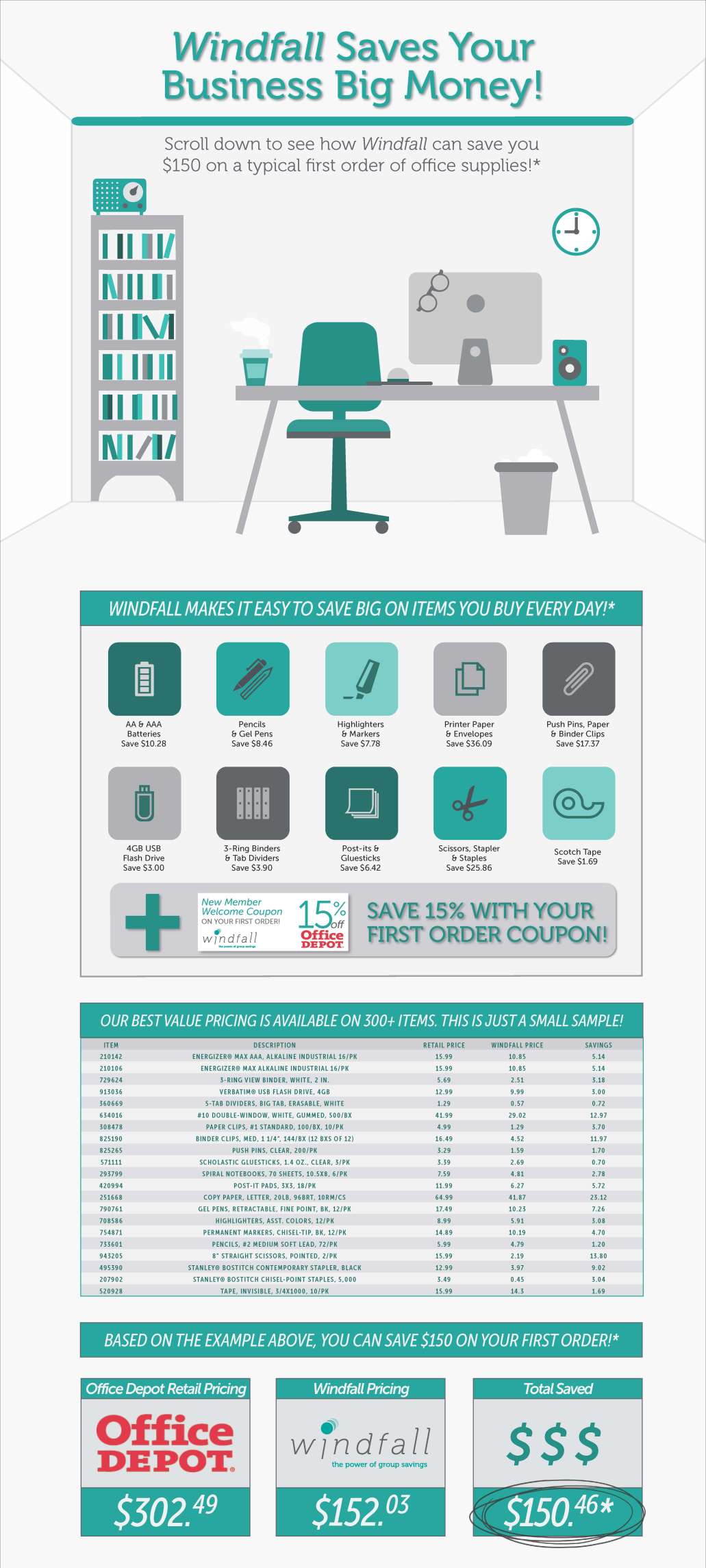
Become a Windfall member today to start saving on your business purchases.
Dangers of Not Collecting on Past Due Debt
Being a small business owner is a rewarding endeavor but it does come with a mountain of challenges. Often, some of those challenges come when it’s time to get paid. Collecting on debt is an important and vital part of any business. It might not be glamours and can even be a little uncomfortable, but the dangers of not collecting on debt owed is much greater than a few tough conversations, pink letters, or bringing in a collection agency.
Not Paid In Full
Time is the most important factor when collecting debt. The sooner the collection process starts the better the odds are that you’ll be paid the full amount owed. After just a few months of non-payment, you’ll collect only about 73 cents on the dollar according to debt collection statistics. Go unpaid for 6 months and chances are you’ll only collect half of the original debt. Time is of the essence.
Damaged Relationships
Landing a customer takes time and money. Losing one to late payments is a danger, but one you can hopefully avoid. Before escalating the debt to a collection agency, send reminders and communicate with the customer effectively. Let them know the end result, but because you value them as a customer things should be worked out sooner rather than later. By communicating effectively and working with the customer as they deal with their rough patch, you may end up with a valuable customer for many more years.
Cash Flow and Projections
Business revenue is calculated many months in advanced based on projections. That projected cash flow is often already allocated to other places to help your company grow. When customers don’t pay their bills this effects the entire way the business runs.
Being Too Nice
When a customer is having problems paying their bills they will often prioritize which ones are more important to pay than others. If they know your business is not aggressive in following up on late payments and doesn’t like sending people to collections, then they will not put you at the top of the priority list. Don’t fall into the trap of being the nice company. Business is business, be assertive and get paid.
Not Being Paid Ever
Collecting debt as quickly as possible is the best way avoid habits of late payments and non-payment. If not followed up on, debt can sit there and even fall off credit reports (after about 6 years depending on your state) and you’ll be unable to collect once past the Statute of Limitations. If a customer knows about this debt law then the best course of action is a collection agency. You won’t receive full payment of the debt, but something is always better than nothing.
A collection agency offers a business owner many advantages when it comes to collecting debt. It takes the entire debt collection process our of your busy hands and lets you and your team focus on running the business. Let professional collectors handle this delicate process and you’ll avoid falling into the above debt collecting dangers.
6 Ways to Reduce Shipping Costs for Trade Shows
Trade shows are a great way to showcase your products and services to an engaged audience. Sales teams are able to spend valuable one on one time with buyers, but trade shows can be an expensive undertaking. Expenses come from booth space, planning and booth display materials. One of the larger costs is shipping everything to the trade show location.
Here are 6 ways to reduce shipping costs for trade show materials.
Weigh and Measure
Make sure to weigh and measure each item in the trade show shipment. This information is important for getting an accurate shipping rate. Many freight companies will estimate the size and weight of your shipment. Overestimations can increase shipping costs. Have all the weight and dimensions written on the outside of each box.
Create a Dense Palette or Crate
Many shipping companies not only charge by weight, but also by overall freight size. Make sure to pack all your boxes as full as possible. When possible, build your palettes taller instead of creating another separate palette. Use industrial plastic cellophane to wrap your freight tall and strong.
Rent Tables
Items such as tables are large, hard to pack and expensive to ship. Don’t ship more materials to the trade show than absolutely necessary. Save the expense of shipping large tables by renting them from the trade show venue.
Think About Lightweight Materials
Items like foam board, carpet, and nylon can be used in creative ways and will lower overall shipping weight. These items are cheap to buy and can be used in creative ways.
Shipping Cases Save In The Long Run
Paying for high-strength shipping containers is a cost that will end up paying for itself in the long run. These cases can safely hold your expensive computers and monitors. Having a monitor damaged due to poor packing methods will cost a lot more than paying for a special shipping case for it.
Show-To-Show Shipping
If a company exhibits at multiple shows a year, it may be more cost effective to ship trade show materials from one trade show location to the next. This will save shipping costs by not having to ship it from the first trade show, back to the business location, then back out to the next trade show. It can be cheaper to ship the materials directly to the city of the next trade show and briefly hold it in storage until the next show. The best and most efficient way to ship from show-to-show is to use less-than-truckload (LTL) shipping. Companies like YRC will even store your exhibit materials free for 30 days.
Many costs associated with trade shows are fixed. Costs like booth space, participation fees and so on. One area where businesses have an opportunity to save is in the shipping of trade show materials. With proper planning and following the above tips, businesses will enjoy a nice savings on their trade show shipping costs.
Ways to Maximize Your Startup Office Layout
When you’re just starting out, you may not be able to afford the office of your dreams. When it’s just you, a small office may not be so bad. After all, how much room does one person need? As you continue to grow, you may find that your office’s layout doesn’t work as well as it used to.
Even though an ideal situation would be to pack up and move to a bigger office, some situations may require you to stay where you are for a while. Maybe your lease isn’t up or you just love your current office’s location. Whatever it may be, there are still ways you can maximize your business’ small office layout and make it work for you and your employees.
Take advantage of the cloud
By storing your business’ documents in the cloud, you can give your employees the option to work at home. When files are in the cloud, your employees will be able to access their business files from anywhere they have Internet access – whether they’re at home, at a local coffee shop, or waiting to pick up their kids from school. The cloud won’t solve all of your problems, but it will give you an opportunity to free up some space by reducing the amount of desks you need in your office.
Group desks together
If your office has an open floor plan, you may be tempted to spread everyone’s desks out as much as possible. Not only does this take up a lot of space and make it hard to navigate but the setup can also make your office look cluttered. Instead, try pairing desks together to create groups. This will free up some space, make your office look more organized, and give your employees an opportunity to collaborate with each other.
Embrace the light
Good lighting can have a huge impact on the look and feel of your office. An office with less light often looks smaller and more cramped, while brighter offices tend to look bigger and more open. Take advantage of natural light as well and add additional lighting to areas that need it.
Think vertically
Take advantage of vertical space by using furniture that sits vertically rather than horizontally. Find shelving systems that attach to your walls with studs and screws, or look for taller bookshelves and filing cabinets. Also consider buying desks that have shelving above it for extra storage space. You can also add standing desks to your office if you think it’s something your employees might be interested in.
Use multifunctional equipment
Whenever possible, use multifunctional furniture and equipment. For example, you may be able to find a small bench, ottoman or side table that can double as storage space. Instead of buying a standard desk, you may be able to buy a regular table that allows room for filing cabinets or drawers underneath it.
If you have a smaller office layout, remember that your employees may need room to breathe every once in awhile. Open office plans, tiny cubicles, and offices with no doors can make your employees feel like they don’t have any privacy, and they may need some time alone every once in awhile. If one of your employees disappears for longer than usual, don’t get upset with them when they come back. They probably just wanted to take a walk or went out for a long lunch in order to feel refreshed. Not everyone loves being around people all the time, and it’s important to give your employees space to breathe.
Simple Ways to Keep Your Employees Motivated and Happy
Your employees are your business’ biggest investment and your most important asset. As a small business owner, you know that in order to maximize revenue, your staff needs to be as productive and efficient as possible. It’s no secret that happy workers are the most productive workers, but how do you motivate a group of employees to work hard and help your business grow?
(more…)
When is it Time to Hire a Debt Collection Agency?
Every business owner wants to make a profit. That’s why you’re in business in the first place, right? There may come a time when your customers don’t pay on time, or even worse, don’t pay at all. You may be tempted to shrug it off if it only happens once or twice, but what happens when it keeps happening? Maybe you try calling your customers or decide to send them collections letters. If they still don’t pay, your best bet is to hire a debt collections agency.
Hiring a debt collection agency may seem like a daunting task, especially if you’ve never done it before. However, it’s important to remember that your cash flow is at stake. You have money to collect, and a professional debt collection agency is trained on how to collect on past due accounts properly and legally.
The biggest mistake that business owners make it to put off hiring a debt collection agency. The longer you wait, the less likely you are to get paid. If you’re wondering when it’s time to hire a debt collector, the general answer is always sooner rather than later. It’s okay to give your customers a little bit of time, but after 90 days, the probability of collection on past due debt goes down dramatically.
Plus, there’s a statute of limitations when it comes to collecting debt, and if you wait too long, you may not be able get paid. In Florida, the statute of limitations is between four to five years, depending on the type of contract involved.
Benefits of hiring a debt collection agency
Even if you don’t want to hire a debt collection agency, doing so can be beneficial for your business. Contacting customers can take a great deal of time, but by hiring a professional, you and your employees can devote your time and energy to other important tasks. The time you save can be used to implement new policies and procedures regarding payments, educating customers about payment options, or focusing on other tasks that need to get done.
Using a collection agency also improves the chances of your customers paying in full, and a professional will even help you get your money faster. A good debt collection agency knows how to collect on past due accounts, and they know how to do it legally. When they contact your customers on delinquent accounts, their main focus is helping you get your money back.
Reasons why business owners wait to hire a debt collector
Many business owners wait to hire a debt collection agency. There are a number of reasons why you may wait to hire a debt collector, including:
- Reputation: You may be worried that when you use a debt collection agency that it will ruin your reputation. Maybe you’re afraid that your customers will have a negative opinion of you or that it will ruin relationships with your customers. The truth is that most people will respect a business that has a structured approach to collecting debt.
- Cost: Like with any other service you outsource, there’s a cost involved with hiring a debt collector. Many businesses avoid hiring one for this reason alone. Debt collectors usually receive a percentage of the amount recovered; meaning most of the money will still go back into your business. If you don’t use a collections agency, you may not get paid at all.
- Loyalty: Many businesses are loyal to their customers, even when they stop paying their bills. It’s okay to be loyal to your customers, but there comes a time where your customers need to be reminded of how important it is that they pay their bills and the impact not paying has on your business.
- Pride: If you don’t like asking for help, you’re not alone. Many businesses are reluctant to call in outside help because they’d rather do it on their own in order to stay in control. If you want to do this, make sure you decide when you will call in outside help.
When trying to collect on past due accounts, one of the best things you can do for your business is to hire a debt collection agency. Debt collection agencies are experienced in collecting debt and will do so in a professional manner. Remember, the longer you wait to hire a debt collector, the less likely it is that you’ll get paid.
Ways to Promote Wellness in the Workplace
With the number of fitness trackers on the market today, it’s no surprise that people are beginning to take health and wellness more seriously. Wellness programs in the workplace lead to increased productivity, less sick days, and reduced healthcare costs for employees. Wellness programs aim to improve the overall health of your employees and focus on preventative health and lifestyle modifications. Even if you don’t have the money to implement a complete wellness program, there are still things you can do to show your employees that you value their health.
Encourage mental breaks
You know better than anyone how stressful work can be. Encourage your employees to take breaks throughout the day so they can relax and unwind. Encourage your employees to socialize with their coworkers to talk about things not related to work. If you’re worried that these breaks will be counterproductive – don’t be. Mental breaks allow your employees to reduce stress and be more productive.
Provide educational materials or bring in experts
If you don’t have enough money to pay for your employees’ gym memberships or provide a company gym, there are still ways you can promote an active lifestyle. Provide your employees with educational materials such as healthy meal plans, at-home workouts, and other educational materials. Or you can bring in nutrition and/or fitness experts to teach your employees about a variety of topics including cooking healthy meals, staying healthy while traveling, stress management skills, and more. Bringing in third-party experts is a great way to provide education and added value to your employees.
Encourage physical fitness and activities
How many hours do you think you spend sitting at your desk? Research has shown that, on average, we sit down 9.3 hours a day. With all of those hours we spend sitting down, it’s more important than ever to get up and move throughout the day.
Many experts recommend 10,000 steps a day, and business owners are following the trend by encouraging their employees to walk at least 10,000 steps. This is a good way to encourage your employees to remain active even while they’re at work. Take it a step further and provide your employees with pedometers or fitness trackers to help them track how many steps they take each day.
Encourage your employees to take a walk in the middle of the day or to move around when they’re feeling stressed. It may feel odd at first to ask your employees to step away from their desk, but your employees will function at their best when they’re happier and less stressed.
Provide healthy snacks
A well-balanced diet is an essential component to leading a healthy lifestyle. Instead of buying soda, potato chips, and candy, try providing your employees with healthier options such as water, fresh fruit, vegetables, nuts, yogurt, and more.
Promote preventative care
One of the best ways to avoid serious illnesses is to work to prevent them in the first place. Save your employees a trip to the doctor’s office by offering vaccinations at work at the beginning of flu season. When your employees avoid the flu, they avoid missing days, if not weeks, of work. If your health insurance policies don’t cover flu shots, consider reimbursing your employees for their vaccination fees.
There are a number of different ways to promote wellness in the workplace, and you’ll likely find something that will work well for your business. Remember: your employees are your most important asset. It’s important that you invest in them wisely and encourage them to be healthy both physically and mentally.
Ways Wellness Programs Can Benefit Your Business
Today, wellness is more than just a fad. People are starting to take ownership of their health and are looking for ways to improve their overall health and wellness – especially when they’re at work. Small business owners are beginning to take notice and are now offering wellness programs for their employees. On the surface, wellness programs may seem like a waste of time and money for your business. However, the cost of not offering these programs may be even higher. Workplace wellness programs have many benefits for both you and your employees.
Wellness programs can range from simply offering health-related information to your employees all to way to fitness education and a company gym. Employees are your business’ most valuable asset, and it’s important that you invest in their health and wellness.
Benefits for employers
Investing in wellness programs means investing in your employees. It’s no secret that healthy employees tend to be happier and more productive. Here are some of the biggest benefits of offering a wellness program for your business:
- Fewer absences: Employees who are stressed tend to get sick more often, meaning they’ll likely miss more days of work than employees who aren’t as stressed. Research has shown that people who are physically healthy miss fewer days of work. Just getting your employees to go on a walk during the day can have tremendous benefits and can be a great way for employees to reduce stress while they’re at work.
- Improved productivity: Workplace wellness programs tend to have the greatest impact on employee productivity. It makes sense too because with better health comes increased productivity. Just imagine what your workplace could look like if your employees were happy, healthy, and fit. Healthy employees not only perform better at work, but they also bounce back faster if/when they do get sick.
- Reduced health insurance costs: Although reducing healthcare costs shouldn’t be your number one reason for implementing a workplace wellness program, many businesses have found that implementing wellness programs reduced their costs for health insurance over time. In the long run, a healthier group of employees may be able to drive down insurance rates for your business.
Benefits for employees
Your employees, no matter how fit, have some sort of health risk, whether it’s unhealthy eating, lack of exercise, excess drinking or smoking, not getting enough sleep, or even something genetic. Offering a workplace wellness program can help your employees implement healthy and positive changes in their lifestyle.|
Implementing a wellness program can seem daunting, especially if you’re a small business. Just remember that the basic idea of creating a wellness program is to respond to your employees’ most pressing health issues by offering services that address these needs. If you want, you can start by offering activities that are free, such as holding stretch breaks, implementing a walking program, offering healthy snacks, and organizing healthy team lunches.
5 of the Costliest Payroll Mistakes and How to Avoid Them
Your business is up and running, you’ve hired a few employees, and clients are beginning to roll in. Now, there’s one big question left – how will you handle compensation? Before your employees can start putting hours into your company, you need to have a solid payroll system in place.
(more…)
4 Office Design Tips for Increasing Productivity
When you think of the word “office,” you don’t often think about a calm or relaxing environment. You may not even think of an office as being a space that makes you productive. And it’s true: being indoors with artificial light for eight or more hours a day can be downright draining. Many studies have shown a correlation between a company’s workspace and their level of productivity. In the past, many business owners opted for rows of desks or cubicles, but now, businesses are learning that bland cubicles no longer lead to a happy or productive workplace. New office trends, such as open floor plans and standing desks, are emerging all over the country, revealing interesting insight into correlation between office design and overall productivity.
(more…)
Going Green: 5 Ways to Create a More Sustainable Office
When it comes to sustainability, green is definitely the new black. Today, business owners across the country are looking for ways to make their office more “green” and environmentally friendly. A greener workplace doesn’t just mean using less paper. It can also mean having a lighter ecological footprint, a healthier work environment, and a more productive workplace, all of which are great for your business’ bottom line. You may see “going green” as a chore, but the truth is, it doesn’t have to be. There are simple changes you can make that will help you create a greener, more sustainable office. Here are some tips:
Power down electronics
You can’t be in two places at once, even though it would be really helpful sometimes. When you’re done with your company meeting, remember to turn off the TV or computer and to turn off the lights before you go back into your office. Done for the day? Turn off your computer before you leave. If you have to leave it on for a server backup or cloud sync, switch the monitor off instead of just using a screensaver. Don’t forget to turn the air conditioning up too. Even turning it up a few degrees can lead to cost savings.
Set up a recycling area
Cutting paper out of your office completely isn’t always realistic for some businesses. If this is the case for your business, consider setting up a recycling bin in your office. That way you and your employees have a place to throw out their old papers, soda cans, and other recyclables. Most areas offer a recycling pick up service, but if you don’t have one in your area, work out a schedule with your team for recycling.
(Important note: make sure you remember to shred sensitive company documents rather than recycling them.)
Collaborate in the cloud
Collaboration used to mean sitting at a giant conference table with a bunch of papers in front of you trying to get a task done. Today, collaboration is becoming more and more digital. This doesn’t mean that people don’t need to interact anymore. It just means that we now have the ability to replace printed out papers with a digital version. The cloud makes it easy to collaborate on documents, regardless of whether you’re in the same office. Plus, you can pull up documents on a computer, edit them in real time, and then they’ll automatically save and update. The more you do online, the less you need paper copies. Try storing your files in the cloud rather than in file cabinets, and review documents on a computer instead of printing them out to make edits. Send emails when possible, and even try sending your clients their invoices digitally.
Add some green to your workspace
No, we’re not saying you have to go and paint your entire office green. Instead, try adding some plants to your desk and other areas of your office, such as the lobby. Plants help to brighten up your workspace, emit oxygen, and even reduce air pollution. If you have employees and clients that are sensitive to plants and pollen, you can even use a small air filter to help clear the air.
Use green materials
Many businesses are picking up on the “green” trend and now offer greener products that are made out of recycled materials. Look for products that are labeled with the words “recycled,” “sustainable,” “biodegradable,” or “green.” Some of the green products out there are recycled paper, biodegradable soap, pens made from recycled materials, biodegradable cleaners, refillable pens, and cloth towels. The best part is that these products can be found at places you already shop, so there’s no need to go to a special store. Also, look into recycling or refilling old ink cartridges instead of buying new ones.
Going green doesn’t have to be difficult. By making a few small changes around your office, you can make a big impact on the environment and on your company’s bottom line. Whether you’re reducing energy, buying more sustainable products, or reducing waste, your every day choices will make a big difference in the long run.